Understanding Your Dog’s Stress Levels: A Guide to Grisha Stewart’s Stress Scale
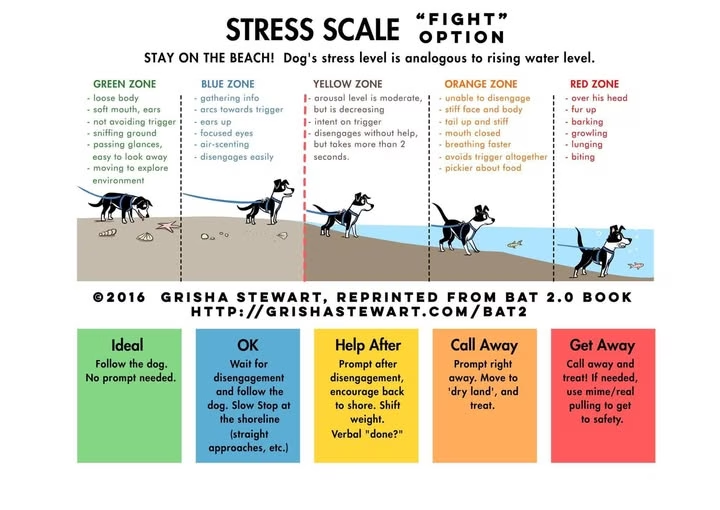
Recognizing subtle changes in your dog’s behavior before a full-blown reaction occurs is essential for effective training and behavior modification. Developed by professional dog trainer Grisha Stewart, the Behavior Adjustment Training (BAT) Stress Scale offers a clear, color-coded framework to help owners identify their dog’s emotional state in real time.
Understanding where your dog falls on this scale allows you to adjust environmental triggers, protect their mental well-being, and set them up for long-term learning success.
The Green Zone: Relaxed and Learning
In the Green Zone, your dog feels safe, calm, and socially open. This is the optimal state for brain elasticity, cognitive processing, and learning new behaviors.
-
Emotional State: Calm, curious, and comfortable.
-
Key Body Language: Loose, wavy body movement; soft eyes with neutral pupils; relaxed ears; open or gently closed mouth; steady, rhythmically moving tail.
-
Behavior: Highly responsive to cues, eager to take treats softly, and capable of sniffing and exploring the environment naturally.
-
Trainer Goal: Keep your dog in this zone during routine training to reinforce positive associations with potential triggers.
The Yellow Zone: Alert and Processing
The Yellow Zone represents the initial transition into stress. Your dog has noticed a trigger—such as a approaching dog, a strange object, or a sudden noise—and is actively evaluating whether it poses a threat.
-
Emotional State: Alert, vigilant, or mildly concerned.
-
Key Body Language: Stiffening posture, slow or frozen movements, hard stare toward the stimulus, mouth closed tightly, ears pinned forward or back, and shallow or rapid breathing.
-
Behavior: Takes treats with more force (hard mouth) or hesitates before accepting them; slower response to known cues; increased displacement behaviors like sudden sniffing, lip-licking, or shaking off.
-
Trainer Goal: Intervene immediately. Increase distance from the trigger before your dog escalates into a reactive state.
The Orange Zone: Over-Threshold and Reactive
Once a dog enters the Orange Zone, stress hormones like adrenaline and cortisol flood the system. The brain shifts from cognitive processing to survival mode, rendering traditional training cues ineffective.
-
Emotional State: Frustrated, fearful, or highly aroused.
-
Key Body Language: Tense, rigid muscles; dilated pupils; lunging forward or pulling away intensely; tail held high and stiff; hackles (piloerection) raised along the spine.
-
Behavior: Vocalizations such as barking, growling, or whining; complete inability to take treats; total loss of responsiveness to human interaction.
-
Trainer Goal: Safety and distance. Swiftly walk your dog away from the trigger using a “U-turn” or emergency exit strategy without scolding, as punishment increases stress.
The Red Zone: Shutdown or Extreme Fight/Flight
The Red Zone occurs when stress remains unmanaged at high levels for an extended period, leading to either intense fight-or-flight behaviors or physical shutdown.
| Aspect | Active Panic / Aggression | Emotional Shutdown (Learned Helplessness) |
| Primary Response | Direct physical fight or panicked flight attempt | Freezing, complete withdrawal, internal panic |
| Vocal Pattern | Continuous intense barking, snarling, screaming | Complete silence |
| Physical Stance | Lunging, thrashing on leash, snap attempts | Cowering, curled body, tucked tail, whale eye |
| Recovery Needs | Immediate removal and several days of decompression | Immediate removal and gentle, non-demanding space |
How to Apply the Scale in Daily Life
-
Track the Baseline: Observe your dog in low-distraction environments so you recognize their unique “Green Zone” markers clearly.
-
Manage the Environment: Work at distances where your dog remains in the Green or low-Yellow zones when introducing new or challenging stimuli.
-
Allow Recovery Time: After an Orange or Red zone exposure, cortisol levels can take 48 to 72 hours to return to baseline. Prioritize low-stress activities—like lick mats, snuffle mats, and quiet walks—during this window.