Understanding the Progression of Dog Bites
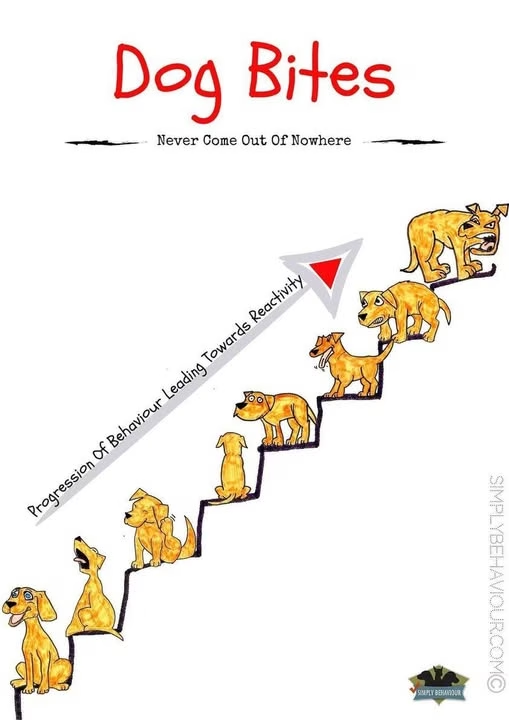
Dog bites rarely happen “out of the blue.” Most are the result of escalating signals that go unrecognized or unaddressed. By understanding the progression of canine aggression, we can respond earlier and more effectively to prevent injury and promote humane outcomes for dogs and people alike.
The Six Levels of Dog Bites
The framework below, adapted from veterinary behaviorist Dr. Ian Dunbar’s Dog Bite Scale, categorizes bite severity and intent. It is widely used by trainers, veterinarians, shelter staff, and legal authorities.
🟢 Level 1: Aggressive Display Without Contact
- What Happens: The dog growls, lunges, snaps, or shows teeth, but makes no physical contact.
- What It Means: The dog is warning and displaying discomfort while maintaining restraint.
- Action: Remove triggers, reduce stress, and consult a behavior professional to avoid escalation.
🟡 Level 2: Teeth Make Contact, No Skin Puncture
- What Happens: The dog’s teeth touch the skin but leave only superficial marks—like red spots or indentations—without breaking the skin.
- What It Means: The dog is escalating but still exhibiting some bite inhibition.
- Action: Begin structured training and behavior modification immediately. This level carries moderate risk.
🟠 Level 3: Single Bite with Shallow Punctures
- What Happens: One to four small punctures occur, none deeper than half the length of the dog’s canine teeth. Victims may suffer minor bruises or tears caused by movement during the bite.
- What It Means: The dog has reduced bite inhibition and is willing to cause harm.
- Action: Seek professional intervention. This behavior presents a clear safety concern.
🔴 Level 4: Deep Punctures, Holding, or Shaking
- What Happens: The bite results in deep wounds (more than half the length of canine teeth), often accompanied by bruising or tearing caused by the dog holding on or shaking.
- What It Means: This level of aggression shows little to no inhibition.
- Action: Immediate safety measures are essential. The dog must be carefully managed, and its future around people or animals must be seriously evaluated.
⚠️ Level 5: Multiple Bites or Repeated Attacks
- What Happens: Multiple deep bites occur in one incident, or the dog has a history of repeated Level 4 bites.
- What It Means: This is highly dangerous behavior. The dog is inflicting harm without control or retreat.
- Action: Legal, medical, and behavioral action is necessary. These dogs may not be safe in a home or public setting without significant restrictions.
❌ Level 6: Fatal Attack
- What Happens: The bite(s) result in death to a human or another animal.
- What It Means: Extreme aggression, often involving intent to kill.
- Action: Requires investigation, possible euthanasia, and community safety responses.
🐾 Why This Scale Matters
Understanding the progression of dog bites enables us to:
- Identify and respond to early warning signs.
- Reduce liability and injury risk in public and private settings.
- Guide humane, evidence-based decisions in shelters, homes, and legal contexts.
Early intervention—especially at Level 1 or 2—can prevent tragic outcomes. No dog escalates to Level 6 overnight. With compassionate training, stress management, and veterinary insight, most dogs showing low-level aggression can be helped.
📚 Further Reading & Resources
- Dunbar, I. (2001). The Dog Bite Scale. [Available online]
- American Veterinary Society of Animal Behavior (AVSAB): www.avsab.org
- Marder, A.R. & Duxbury, M.M. (2008). “Aggression toward People: A Veterinary Behavior Perspective.” Journal of Veterinary Behavior.