The Science Behind “Puppy Eyes”: Evolution’s Masterpiece
Keywords: Puppy eyes, dog communication, human-animal bond, evolutionary biology, facial muscles, domestication, oxytocin.
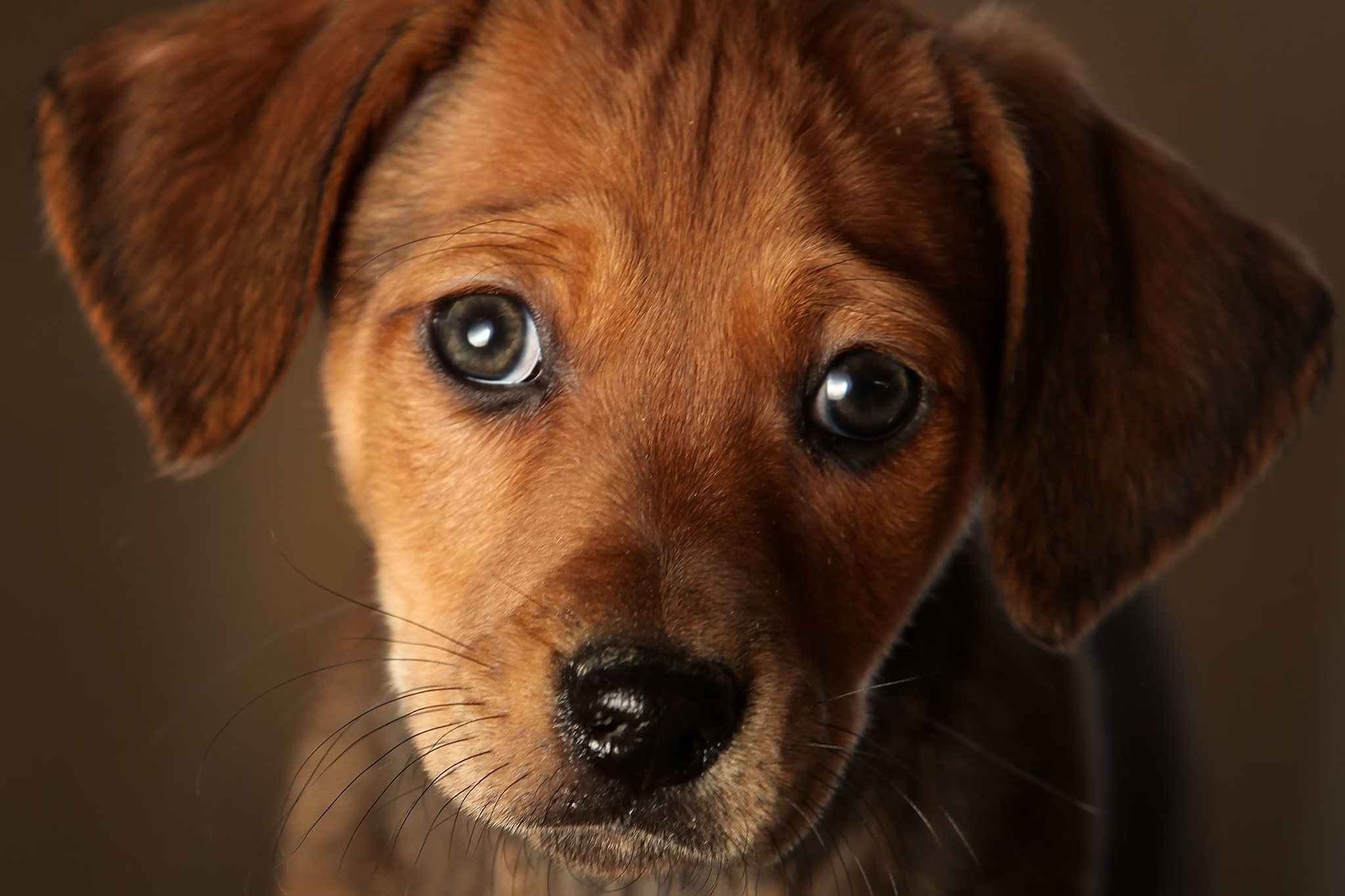
We have all fallen victim to “puppy eyes.” That soulful, pleading gaze—often accompanied by raised eyebrows that make a dog’s forehead wrinkle—seems to melt even the hardest hearts. Recent scientific research suggests this isn’t just an adorable coincidence; it is a sophisticated communication tool shaped by thousands of years of domestication.
The Muscle That Changed Everything
A groundbreaking 2019 study published in the Proceedings of the National Academy of Sciences revealed that domestic dogs (Canis familiaris) possess a facial anatomy distinct from their wild ancestors. Dogs have a specific muscle, the levator anguli oculi medialis, which is largely absent in wolves. This muscle allows dogs to intensely raise their inner eyebrow, creating a wide-eyed, infant-like expression.
Why It Evolved
Scientists believe this muscle developed through human selection. During domestication, dogs that could trigger a caregiving response in humans were more likely to be fed and protected. This “puppy dog look” mimics the facial movements human infants make when distressed, naturally tapping into our nurturing instincts. Evolutionarily, dogs literally grew new muscles to better “speak” to our emotions.
The Chemical Connection
The bond is reinforced by more than just sight. When we lock eyes with a dog making this expression, our brains release oxytocin, the “love hormone” involved in social bonding and parent-infant attachment. This creates a feedback loop: the dog’s gaze triggers our affection, and our positive response reinforces the dog’s behavior. In fact, research shows that shelter dogs who use “puppy eyes” more frequently are adopted faster.
The science of puppy eyes highlights the deep co-evolutionary relationship between our two species. It proves that dogs have adapted their physical bodies to connect with us, turning a simple facial movement into a testament to the enduring human-animal bond.